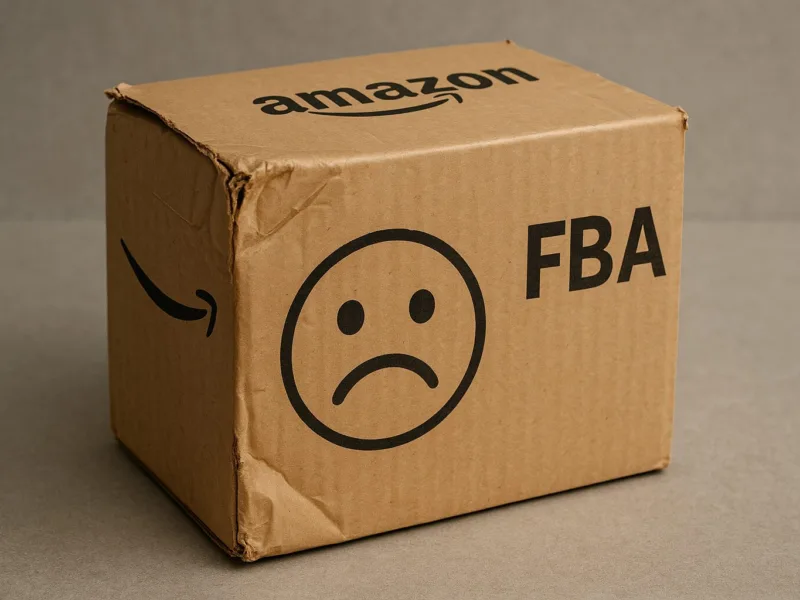
Are you tired of angry customer emails about damaged Amazon deliveries? These returns and bad reviews are expensive, and they damage your brand's reputation with every crushed box.
Your packages are likely getting damaged because of internal failures. This includes using the wrong box size, not enough cushioning or void fill, and using low-quality materials. Without proper internal protection, your products will shift and break during the harsh shipping process.
As a packaging manufacturer for many Amazon sellers, I've seen how easily preventable damage can destroy profit margins. The journey to the customer is rougher than you think. Let's look at the specific reasons your packages are failing and how you can fix them.
Is the Inside of Your Box an Empty, Dangerous Space?
Are your products arriving scratched, dented, or broken? Even a sturdy outer box won't help if the items inside are rattling around, colliding with each other during transit.
Damage often happens when there's too much empty space in the box. Without proper cushioning, void fill, and separation between items, your products will shift and collide. Securing the contents is just as important as the box itself.
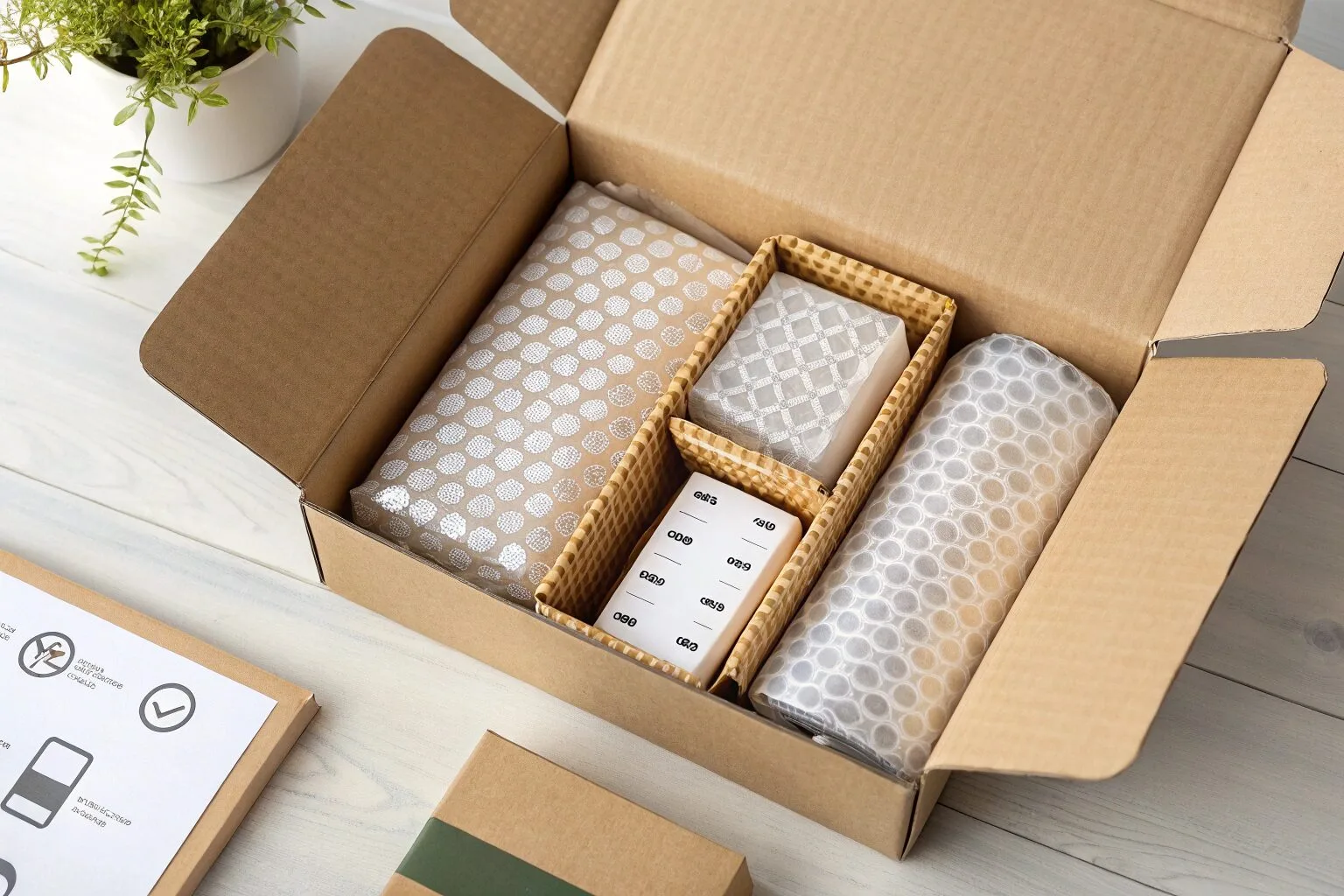
Many sellers focus only on the outer box, but the real battle is won or lost inside. The journey from your warehouse to an Amazon fulfillment center, and then to the customer, involves conveyor belts, trucks, and multiple handlers. During this process, a box can be dropped, shaken, and flipped over. If the inside of your box is an open cavity, you are guaranteeing that your products will suffer damage. At Finer-packaging, we always design the internal structure with as much care as the external print.
The Role of Cushioning and Void Fill
These two things sound similar, but they do different jobs.
- Cushioning: This is about protecting items from shock and impact. It's the padding that absorbs the force from a drop. Examples include bubble wrap, foam inserts, or crinkle paper wrapped directly around the product. Your product should have at least 2 inches (5 cm) of cushioning on all sides.
- Void Fill: This is about filling the empty spaces to prevent movement. Air pillows and packing peanuts are common void fills. Their only job is to stop the cushioned item from shifting inside the box. If your product can slide back and forth, it will eventually wear down the cushioning and become vulnerable.
Separating Multiple Items
Shipping multiple items in a single box without separation is a recipe for disaster. During transit, these items will act like rocks in a tumbler, hitting and scratching each other. Heavier items will crush lighter ones. This is especially true for products with delicate surfaces or fragile components.
- Solution: Use simple cardboard dividers or partitions. These are inexpensive and create individual cells for each item, keeping them separate and secure. For more fragile or premium items, a custom-cut EVA foam insert provides the ultimate protection by holding each component in a precise cavity.
Common Internal Packaging Mistakes
Here’s a quick guide to what might be going wrong inside your box.
| Problem | Description | Simple Solution |
|---|---|---|
| Too Little Cushioning | The product is wrapped in only a thin layer of bubble wrap. | Use thicker cushioning materials or custom inserts. |
| No Void Fill | The cushioned item can still slide around in the box. | Add air pillows or crinkle paper to fill all gaps. |
| Items Colliding | Multiple products are loose in the same box. | Use cardboard dividers or wrap each item separately. |
| Heavy on Top of Light | A heavy item is placed on a fragile one, crushing it during transit. | Pack heavier items at the bottom and use dividers. |
Fixing the inside of your box is the single most effective way to reduce damage rates immediately.
Is Your Box Itself the Weakest Link?
Does your packaging arrive crushed, torn, or popped open? If the container itself is failing, nothing inside stands a chance. The box is your product's first line of defense.
If you use a box that is too big or too small, or made from flimsy cardboard, it will fail under stress. Improper sealing with weak tape allows the box to open, exposing your products to damage and moisture.
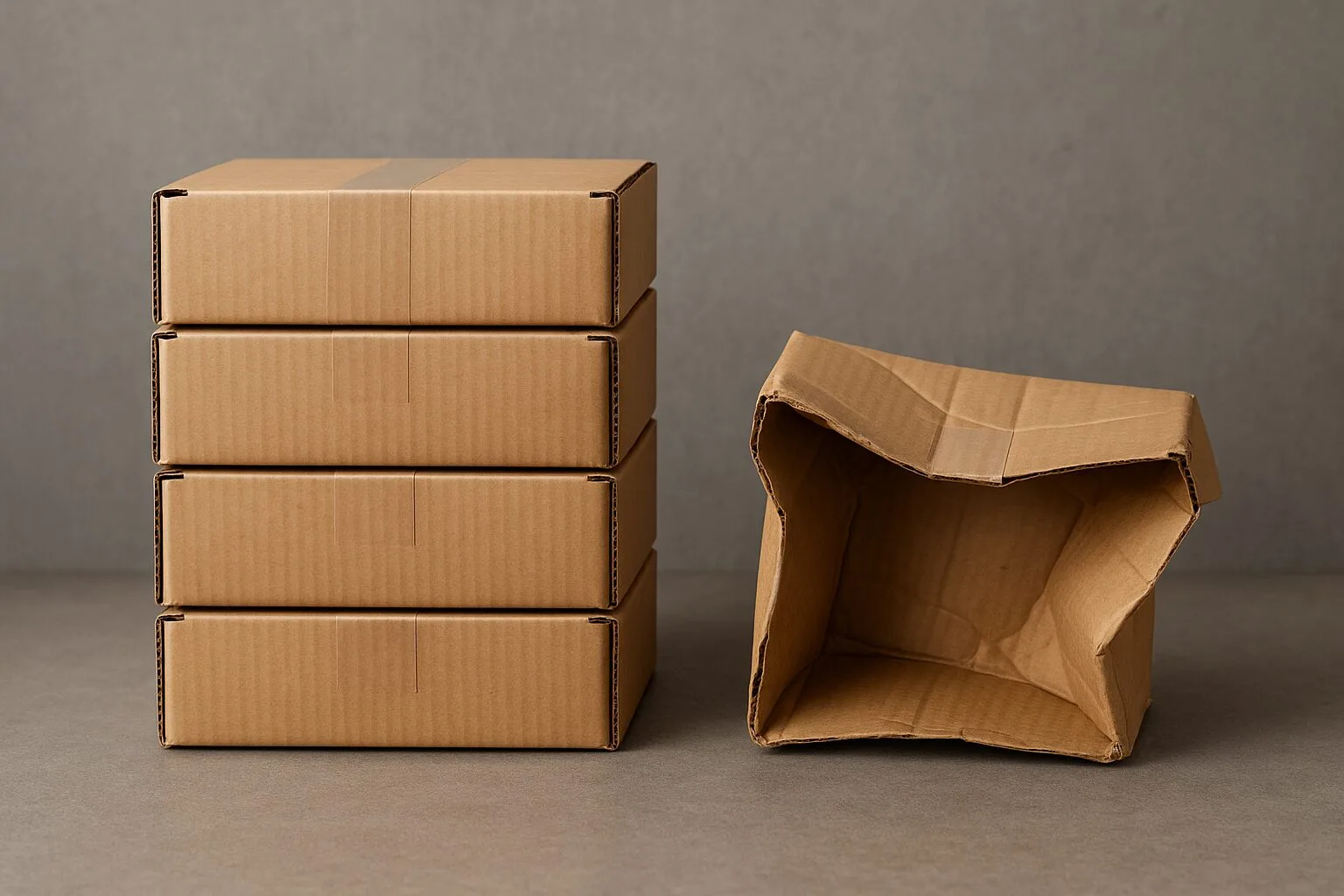
The shipping box is the armor that protects your product on its long and dangerous journey. Choosing the right armor is critical. Many brands try to save a few cents by using lower-quality materials or the wrong-sized box, but this is a classic false economy. The cost of one returned, damaged product will almost always wipe out the savings from buying cheaper boxes for hundreds of shipments. As a box manufacturer, we know that material strength and construction are non-negotiable for e-commerce.
Choosing the Right Box Size
The box size must be appropriate for what is inside.
- Too Large: A box that is too big forces you to use an excessive amount of void fill. If that void fill settles or pops (like an air pillow), it creates empty space, allowing your product to shift and get damaged. A large, half-empty box is also more likely to be crushed when heavier packages are stacked on top of it.
- Too Small: A box that is too small leaves no room for proper cushioning. The product will be touching the outer walls, meaning any external impact is transferred directly to your item. This completely defeats the purpose of the box. The ideal size allows for about 2 inches of cushioning around your product on all sides.
The Importance of Material Quality
Not all cardboard is created equal. The strength of a corrugated box is determined by its construction and an Edge Crush Test (ECT) rating. For most e-commerce shipments, you should not be using a box with a rating lower than 32 ECT.
- Flimsy Cardboard: Low-quality board has less structural integrity. It can be easily punctured, and it will lose most of its strength if it gets damp.
- Weak Flutes: The wavy layer inside the cardboard (the flute) provides cushioning and strength. If this is crushed or made from poor material, the box will collapse under pressure. We typically recommend B-flute or C-flute corrugated board for standard shipping boxes.
Proper Sealing Techniques
Your box is only as strong as its seal. A high-quality box sealed with cheap tape is a failed package waiting to happen.
- Use the Right Tape: Use pressure-sensitive plastic tape or water-activated tape that is at least 2 inches (5 cm) wide. Do not use masking tape, cellophane tape, or string.
- Apply the H-Taping Method: This is the standard for properly sealing a box. Tape along the center seam where the flaps meet. Then, tape along the two edge seams. This creates a seal that looks like the letter "H" and reinforces all the weakest points.
Making sure your box is the right size, made from strong material, and sealed correctly is a fundamental step that many businesses overlook.
How Are You Preparing Your Package for the Brutal Shipping Journey?
Are your packages being handled carelessly? Do you find that products sensitive to heat or cold are arriving ruined? You cannot control the handlers, but you can communicate better.
Carriers will mishandle packages. To minimize damage, you must use clear warning labels like "Fragile" and "This Side Up." Without these visual cues, handlers won't know to treat your shipment with extra care, increasing the risk of damage.
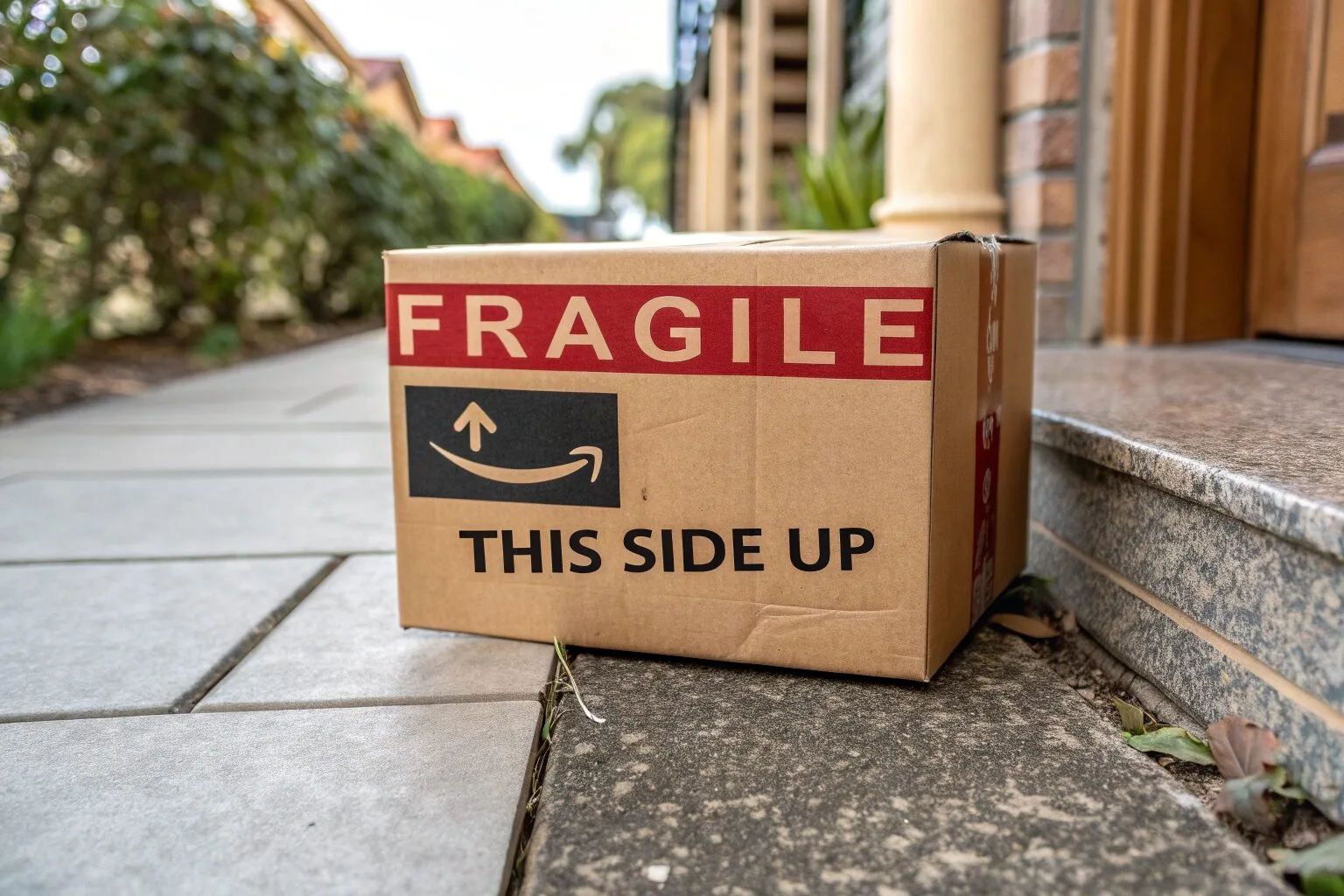
Once your package leaves your hands, it enters a complex and automated system designed for speed, not gentle care. You must assume that your box will be dropped, thrown, and stacked under heavy items. While you cannot ride along with your package to protect it, you can take steps to prepare it for the reality of transit and communicate its needs to the people and machines that handle it along the way. Ignoring this final step is like sending a soldier into battle without any instructions.
The Power of Clear Labeling
While a "Fragile" sticker is not a magic force field, it does provide a clear visual cue to human handlers. It can be the difference between a package being tossed and one being placed more gently.
- When to Use Labels: Use them only when necessary. If every box is marked "Fragile," the label loses its meaning. Reserve it for products that are genuinely delicate.
- "This Side Up": This is crucial for products that can leak or must be kept in a specific orientation, such as liquids, semi-liquids, or items with parts that can settle.
- "Do Not Stack": Use this for items that cannot bear any weight, but be aware that in highly automated systems, this instruction may be ignored. Your box should still be built to withstand some stacking pressure.
Acknowledging the Carrier's Reality
It is a fact that carriers handle millions of packages a day. Damage is a statistical certainty. Your job is not to expect perfect handling but to package your products defensively. This means assuming the worst-case scenario.
| Carrier Action | Your Defensive Strategy |
|---|---|
| Dropping the package | Use at least 2 inches of high-quality cushioning. |
| Stacking heavy items on top | Use a strong, high-ECT rated box that won't crush easily. |
| Shaking and vibration | Use void fill to ensure contents cannot move at all. |
| Exposure to weather | Seal the box perfectly with the H-tape method to keep out moisture. |
Accounting for Environmental Factors
The journey can also expose your package to extreme temperatures inside a truck trailer or on a tarmac. This can have a huge impact on certain products.
- Cosmetics & Food: Can melt, spoil, or separate in high heat.
- Electronics: Can be damaged by condensation caused by rapid temperature changes.
- Liquids: Can expand or freeze in extreme cold, potentially cracking their containers.
If you are shipping temperature-sensitive products, you must consider insulated packaging options or even work with carriers that offer temperature-controlled shipping services, although this can be more expensive.
Conclusion
Reducing Amazon shipping damage requires a total strategy. You must secure the items inside the box, use a high-quality container, and prepare it for the realities of rough handling.