Are you worried your brand is falling behind on sustainability? Do you fear eco-conscious customers are choosing competitors because your packaging looks wasteful? Greenwashing doesn't work anymore; customers expect real change.
Your packaging likely isn't eco-friendly enough if it uses mixed materials instead of mono-materials, lacks FSC certification, relies on petroleum inks, or misses clear disposal instructions. Today's standard requires high PCR content, minimalist design, and honest communication about end-of-life disposal.
Sustainability is no longer a bonus feature; it is a baseline expectation. As a manufacturer, I see brands struggle to define what "eco-friendly" actually means. Let's break down the specific criteria to see where your packaging stands.
Are You Using the Right Sustainable Materials?
Do you think "cardboard" automatically means "sustainable"? Are you unsure if your plastic components are actually being recycled? Using the wrong base materials is the most common mistake brands make.
To be truly eco-friendly, packaging must use mono-materials (like pure glass or PET) for easy recycling, source paper with FSC certification to ensure responsible forestry, and incorporate a high percentage of Post-Consumer Recycled (PCR) content.
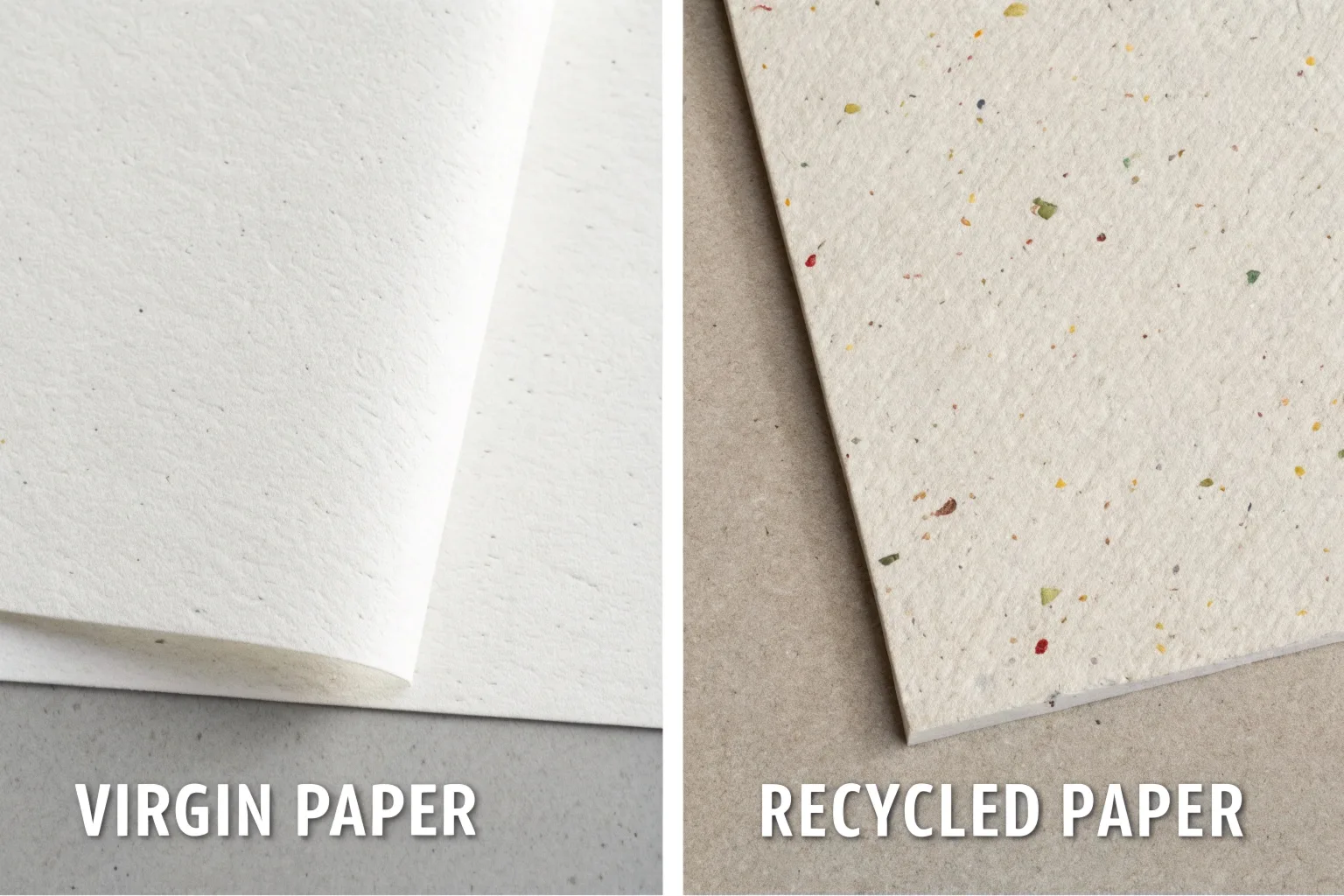
The foundation of green packaging lies in the raw materials. It is not just about being "recyclable" in theory; it is about being recycled in practice and reducing the demand for virgin resources.
The Importance of Mono-Materials
One of the biggest hurdles in recycling is mixed materials.
- The Problem: Many luxury boxes use paper laminated with plastic, or jars made of mixed plastics glued to metal. These cannot be easily separated at recycling facilities, so they end up in landfills.
- The Solution: Switch to mono-materials. This means the entire component is made of one thing—100% paper, 100% PET plastic, or 100% glass. Mono-materials are straightforward for recycling plants to process. If you must use different materials (like a glass jar with a plastic lid), ensure they are easily separable by the consumer.
FSC Certification is Non-Negotiable
If you use paper boxes, where does that paper come from?
- Responsible Sourcing: The Forest Stewardship Council (FSC) certification guarantees that the wood pulp used in your cardboard comes from responsibly managed forests, not from illegal logging or endangered habitats.
- Trust Signal: Without the FSC logo, you cannot prove your "natural" box isn't contributing to deforestation. At Finer-Packaging, we strongly encourage clients to use FSC-certified materials because it adds verifiable trust to your brand.
The Power of PCR (Post-Consumer Recycled) Content
Recycling is a loop. If we only make recyclable things but never buy recycled materials, the loop breaks.
- Virgin vs. PCR: "Virgin" material is brand new (e.g., new plastic from oil, new paper from trees). PCR material is made from waste that consumers have already used and recycled.
- The Standard: Leading brands are now demanding 50% to 100% PCR content in their packaging. Using PCR reduces the carbon footprint significantly and creates a market for recycled waste.
| Material Type | Sustainability Level | Why? |
|---|---|---|
| Virgin Plastic/Paper | Low | Depletes new resources; high carbon footprint. |
| Mixed Materials | Very Low | Hard or impossible to recycle; creates trash. |
| Mono-Material | High | Easy to recycle; supports circular economy. |
| High % PCR Content | Very High | Reduces waste; lowers carbon footprint. |
Is Your Design Maximizing Efficiency and Minimizing Harm?
Does your unboxing experience feel "premium" because it has five layers of wrapping? Are you using shiny inks that look great but poison the recycling stream? Efficient design is just as important as material choice.
Design for sustainability means minimizing waste through "lightweighting" and removing excessive layers. It also means replacing toxic petroleum-based inks with soy or vegetable alternatives to ensure the material remains biodegradable and safe.
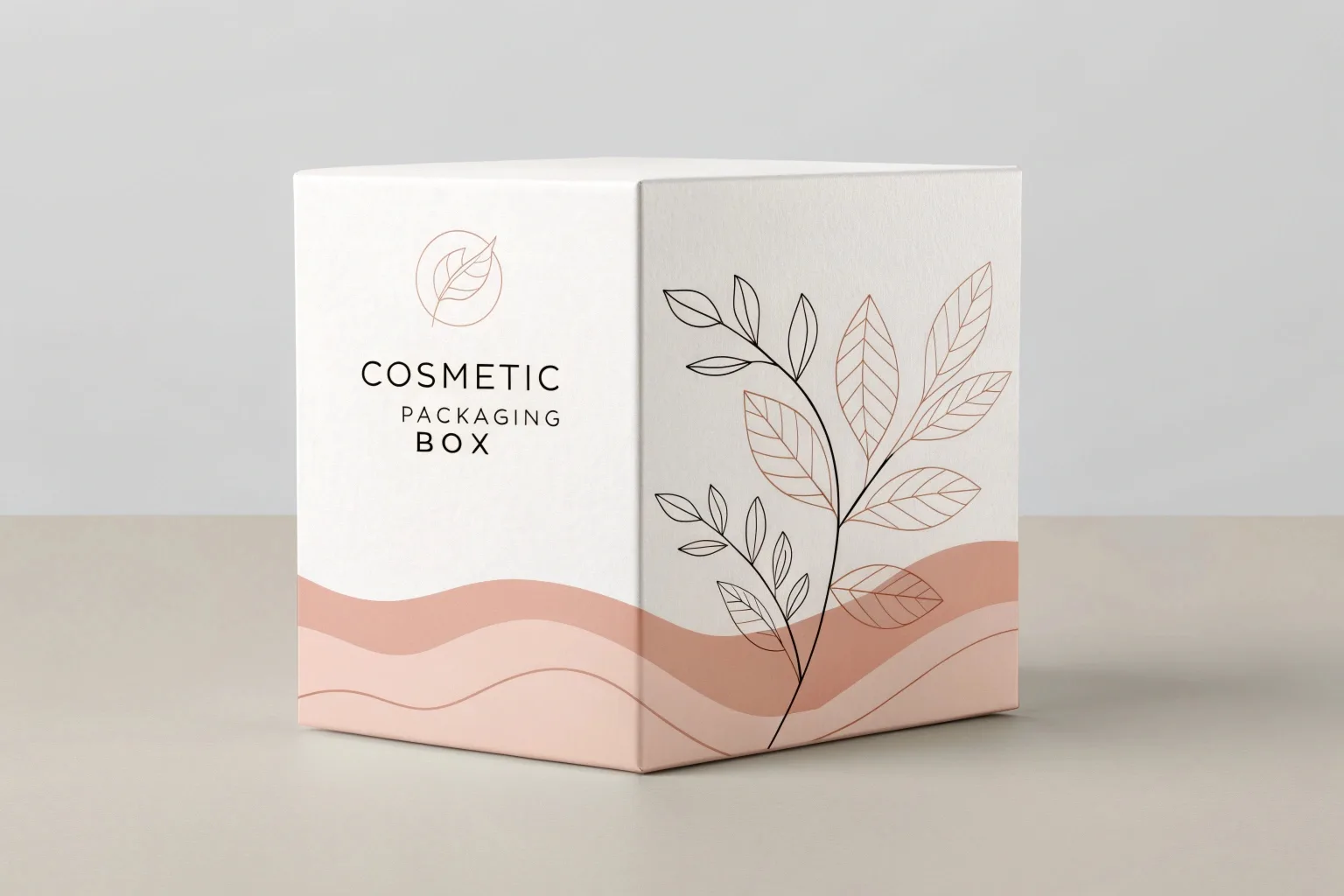
Many brands confuse "luxury" with "excess." However, the modern consumer sees excess as negligence. A truly premium eco-design is smart, efficient, and clean.
The Trap of Over-Packaging
We used to think a heavy box meant quality. Now, it often signals wastefulness.
- Minimalism: Does your cream need a jar, inside a plastic tray, inside a box, inside a sleeve, wrapped in cellophane? Probably not.
- Lightweighting: This involves engineering the packaging to use the absolute minimum amount of material needed to protect the product. Lighter packaging means less material waste and, crucially, a lower carbon footprint during shipping. If we can shave 10% off the weight of your box, we save fuel on every truck and ship that carries it.
- Right-Sizing: Using a box that fits the product snugly eliminates the need for void fill (like peanuts or bubble wrap).
Inks and Finishes Matter
You might have a 100% recycled box, but you can ruin its eco-credentials with the print.
- The Ink Issue: Traditional inks are often petroleum-based and release Volatile Organic Compounds (VOCs). They can also be difficult to remove during the paper recycling process (de-inking).
- The Solution: We recommend soy-based or vegetable-based inks. They are renewable, emit fewer VOCs, and make the paper easier to recycle.
- Finishes: Be careful with laminations. A high-gloss plastic lamination makes a paper box non-biodegradable. Opt for water-based coatings or leave the paper textured for a raw, natural feel.
I remember a client who wanted a "100% biodegradable" box but asked for a thick metallic foil lamination over the whole surface. We had to explain that the plastic film would prevent the paper from ever breaking down, leading to a complete redesign of their finish strategy.
Does Your Packaging Guide the Consumer After Use?
Do your customers stand over the recycling bin, confused about which bin your jar goes in? Are you using "compostable" claims that only work in industrial facilities? Confusion leads to contamination, not recycling.
Packaging must include clear disposal instructions for each component. It should ideally support a refillable system to extend its life. Avoid vague "compostable" claims without specifying industrial requirements, and use your brand story to explain your specific eco-choices transparently.
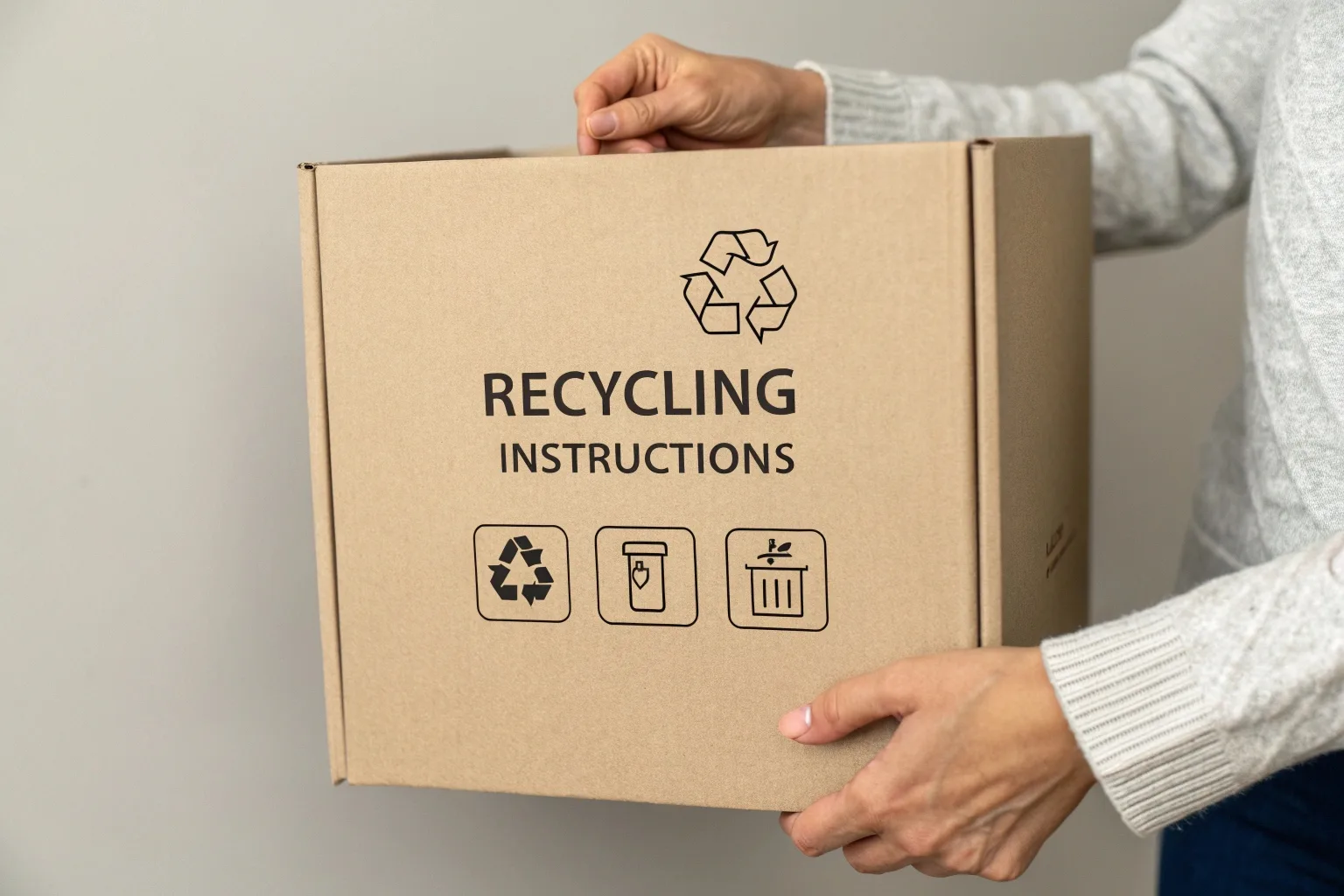
The lifecycle of your packaging doesn't end when the customer opens it. You are responsible for guiding them on what to do next.
Clear Disposal Instructions
"Please Recycle" is no longer enough.
- Specific Guidance: You need to tell the customer exactly what to do. For example: "Rinse jar and recycle with glass. Remove pump and dispose in trash. Flatten box and recycle with paper."
- How2Recycle: Many brands are adopting standardized labels (like How2Recycle) to make this instant and visual.
- Compostable Confusion: If you use compostable materials, be honest. Most bioplastics require industrial composting (high heat) and will not break down in a backyard compost bin. If you don't make this clear, customers might throw it in their garden, where it becomes litter, or in the recycling bin, where it contaminates the plastic stream.
The Refill Revolution
The most sustainable package is the one that gets reused.
- Refill Systems: Consumers are increasingly looking for refillable options. This involves a durable, heavy outer container (glass or metal) that the customer keeps, and a lightweight refill pod or pouch that they buy repeatedly.
- Design Challenge: This requires precise manufacturing to ensure the refill fits perfectly and the mechanism lasts for years.
Transparent Brand Storytelling
Don't just slap a green leaf icon on your box.
- Educate: Use the back of the box or a QR code to explain why you made these choices. "We chose aluminum because it is infinitely recyclable." "We use soy ink to reduce pollution."
- Honesty: If your pump isn't recyclable yet, admit it and say you are working on it. Customers appreciate transparency over perfection.
| Eco-Claim | What Consumers Often Think | What It Often Means | Better Approach |
|---|---|---|---|
| "Eco-Friendly" | Good for the planet | Vague marketing fluff | Be specific: "Made from 80% PCR" |
| "Compostable" | Thrown in the garden | Requires industrial facility | Label: "Industrial Compostable Only" |
| "Recyclable" | Goes in the blue bin | Theoretically recyclable, but maybe not locally | Label: "Check local guidelines" or separate parts |
Conclusion
If your packaging lacks mono-materials, FSC certification, or clear disposal instructions, it isn't meeting today's standards. Switch to PCR content, eco-inks, and honest storytelling to truly align with modern consumer values.