
Your beautiful rigid gift boxes look great, but they are a nightmare to store and ship. These hidden costs are quietly eating into your profits with every order.
Traditional gift boxes are expensive because they are pre-assembled and don't ship flat. This wastes enormous space in transit and storage. Carriers charge for this wasted space through dimensional weight, making you pay for shipping empty air and storing bulky, inefficient inventory.
At Finer-packaging, I see clients struggle with these costs all the time. The problem goes beyond just a shipping bill. Let's break down exactly how these rigid boxes create a cascade of expenses that a modern, flat-packed design can solve.
Why Does Their Fixed Shape Waste So Much Space and Money?
You look at your warehouse and see stacks of boxes taking up valuable room. Your shipping bills are shockingly high, even for lightweight products. This is the price of empty air.
Because traditional gift boxes are rigid and can't be collapsed, they consume maximum volume from day one. Logistics carriers penalize this with dimensional weight pricing. You end up paying huge fees for shipping mostly empty space in containers and trucks.
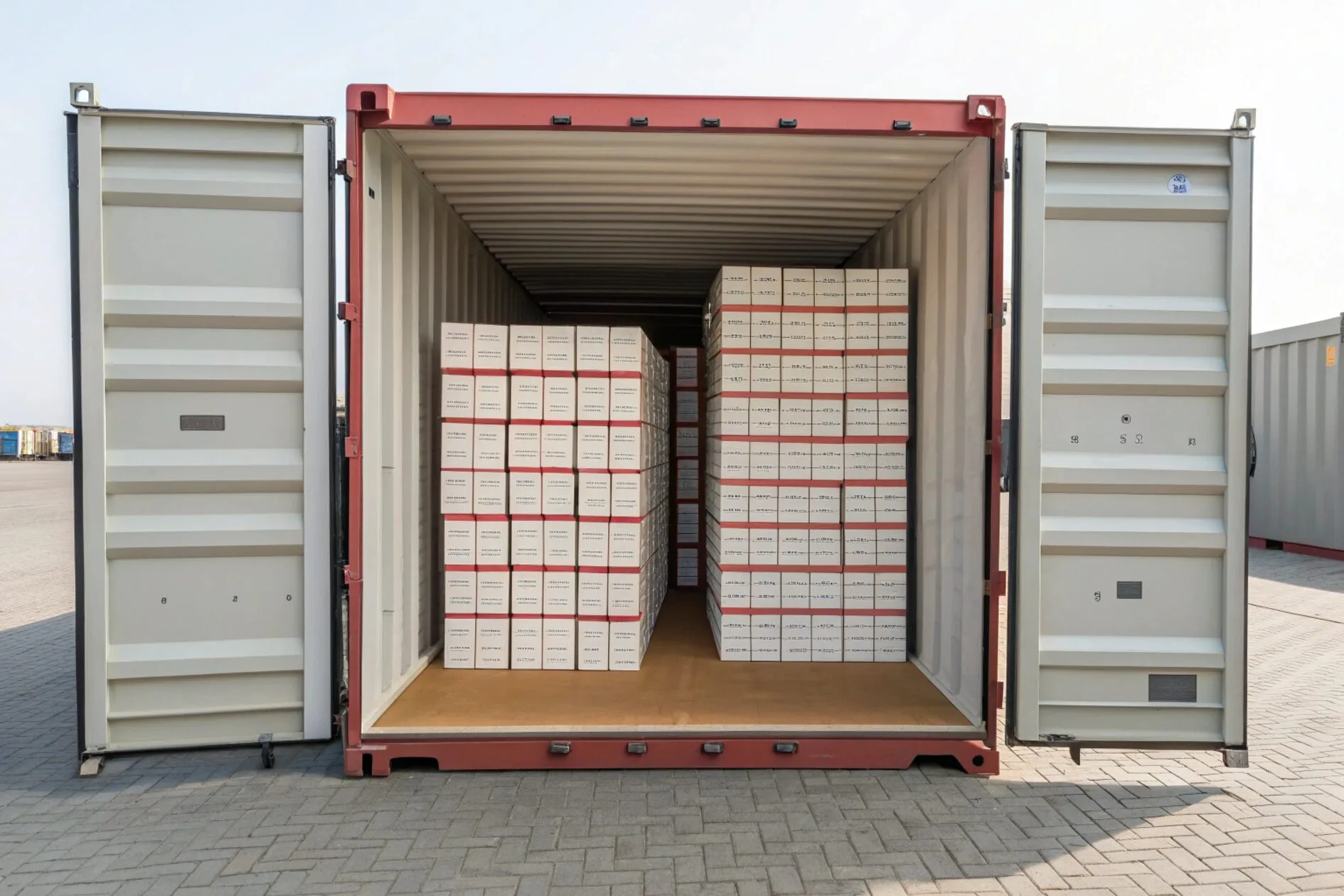
The single biggest problem with traditional rigid boxes is that they cannot be flattened. From the moment they are made in our factory to the moment they arrive at your facility, they occupy their maximum volume. This fundamental flaw creates a chain reaction of costs that impacts both shipping and storage. They force you to handle your logistics in the most inefficient way possible. As a manufacturer who ships globally, I can tell you that wasted space is the most expensive thing you can ship.
The Dimensional Weight Trap
Logistics carriers like FedEx, UPS, and DHL don't just charge based on how much a package weighs. They charge based on how much space it takes up in their truck or airplane. This is called dimensional weight (or DIM weight). They calculate the volume of your box and assign a "weight" to it. You are then billed for whichever is higher: the actual weight or the DIM weight.
- The Problem: A large, lightweight gift box has a very high DIM weight. You might be shipping a 1 lb product, but if it's in a big box, you could be paying for 10 lbs of shipping. You are literally paying to ship empty air.
Inefficient Transport and Storage
This inefficiency scales up at every stage.
- Shipping Containers: When we load a 40-foot container to ship from China to North America, we can fit tens of thousands of flat-packed boxes. With pre-assembled rigid boxes, that number drops dramatically. A huge percentage of that container's volume is wasted.
- Warehouse Space: Once the boxes arrive at your facility, they demand a massive amount of shelf space. Storing 1,000 pre-assembled boxes might take up an entire pallet rack section, while 1,000 flat-packed boxes could fit on a single shelf. This directly increases your overhead storage costs.
Here’s a simple comparison for an order of 1,000 boxes:
| Box Type | Volume for 1,000 units (approx.) | Shipping & Storage Efficiency |
|---|---|---|
| Traditional Rigid Box | 10 cubic meters | Very Low (paying to ship and store air) |
| Collapsible/Flat-Packed Box | 1 cubic meter | Very High (10x more efficient use of space) |
The math is simple. The fixed, non-collapsible nature of these boxes forces you to buy more space than you actually need at every step of the supply chain.
What Are the Hidden Costs of Handling and Protecting Bulky Boxes?
You've paid for the wasted space, but the expenses don't stop there. These bulky boxes are also heavy, hard to handle, and surprisingly fragile, leading to more costs in labor and damages.
Their rigid construction uses heavy materials, increasing weight. To prevent crushing, they need larger outer cartons and extra padding, further boosting size. This makes manual handling slow, and a single impact can damage multiple boxes, leading to write-offs.

Beyond just taking up space, the physical nature of traditional gift boxes creates a whole new set of challenges and costs. They are not just empty; they are also heavy, awkward, and vulnerable. This combination means you have to spend more money on materials to protect them, more money on labor to move them, and you lose more money when they inevitably get damaged. It’s a snowball effect where one inefficiency creates another, driving your operational costs higher and higher.
The Cost of Extra Protection
A rigid gift box needs to look perfect when it reaches the customer. But its structure makes it prone to crushed corners and dents during shipping. To prevent this, you are forced to add layers of protection, which adds cost.
- Larger Outer Cartons: You can't just ship the gift box itself. You need a bigger, stronger shipping carton to put it in.
- Void Fill Materials: You then have to fill the empty space between the gift box and the shipping carton with packing peanuts, air pillows, or bubble wrap.
- Result: You are now paying for a larger master carton and extra packing materials, all of which increases the final DIM weight of the shipment. You are paying more to protect the box that already costs too much to ship.
Heavy Materials and Slow Handling
Traditional rigid boxes are typically made from thick, heavy greyboard. This material is chosen for its sturdiness and premium feel, but it adds significant actual weight to your shipment. So even without the DIM weight penalty, the base shipping cost is higher than for lighter, foldable alternatives. This bulkiness also slows down your entire fulfillment process.
- Manual Handling: It is physically slower and more tiring for your staff to pick, pack, and move large, pre-assembled boxes compared to neat stacks of flat-packed items. This reduces your labor efficiency.
Higher Risk of Damage
Ironically, despite being "rigid," these boxes are easily damaged in a way that makes them unsellable.
- The Domino Effect: If a heavy object impacts a carton of assembled gift boxes, the force can be transferred through the empty space, crushing multiple boxes at once. A single drop can result in a significant write-off of your inventory. Flat-packed boxes, being dense and solid, are far more resilient to this kind of impact damage.
How Do Bulky Boxes Complicate Your Inventory and Return Process?
Your warehouse is full, making it hard to manage stock. When a customer returns an item, the cost of shipping the big, empty box back is a final, frustrating expense you have to absorb.
Managing inventory for many styles of bulky boxes is complex and space-intensive. Furthermore, the high cost of reverse logistics is often ignored; shipping a large empty box back for a product return is incredibly inefficient and expensive.

The financial pain of traditional gift boxes extends into the less visible parts of your business, like inventory management and reverse logistics. These are operational headaches that can quietly drain resources and complicate your ability to run a lean, efficient business. While a customer sees a beautiful box, your operations team sees a logistical puzzle that is difficult and expensive to solve, especially when things don't go as planned.
The Inventory Management Headache
For any brand selling multiple products, you need multiple sizes and styles of gift boxes. Managing this inventory becomes a major challenge when each box is a bulky, space-consuming unit.
- SKU Sprawl: Let's say you have 10 different box styles. With traditional boxes, that means finding space for 10 large stacks of inventory. The same number of flat-packed boxes could be neatly organized on a few shelves, making it much easier for your team to find and pick the correct SKU for each order.
- Forecasting Difficulty: Because they take up so much space, you are often limited in how much stock you can hold. This can lead to stockouts if you have an unexpected surge in demand for one particular size, as you simply don't have the floor space to keep a deep buffer of inventory.
The Hidden Cost of Returns (Reverse Logistics)
No business wants to think about returns, but they are a reality of e-commerce. With traditional gift boxes, the return process is uniquely painful and expensive.
- Inefficient Shipping (Again): When a customer returns a product, they have to ship the big, bulky box back to you. This costs you or your customer a significant amount of money, again because of DIM weight. This creates a poor customer experience and can eat into or completely erase the profit margin from the original sale.
- The Empty Box Problem: In many cases, the customer keeps the product but wants to return the "gift packaging." The inefficiency of shipping an empty box is obvious.
Here’s how flat-packed, collapsible rigid boxes, a solution we specialize in, solve this:
- Easy Storage for the Customer: They can store the box flat until they need it.
- Efficient Returns: If a return is necessary, the process is far less costly and cumbersome.
Ultimately, the logistical burden of bulky boxes creates hidden costs and operational friction that modern, collapsible packaging solutions were specifically designed to eliminate.
Conclusion
Traditional gift boxes are costly due to their inefficient, space-wasting design. They inflate shipping fees, consume valuable warehouse space, and add hidden costs for handling, protection, and returns.