
Is your packaging eating into your Amazon profits or causing damaged returns? Many sellers underestimate the complexity of FBA requirements until it’s too late. Designing for Amazon is a tough balancing act.
The biggest challenges include minimizing dimensional weight to lower fees, engineering boxes to pass rigorous ISTA-6 drop tests, meeting strict "Ships in Own Container" (SIOC) standards, and integrating mandatory compliance labeling—all while trying to maintain a premium unboxing experience and withstand global logistics.
As a manufacturer working with countless Amazon sellers, I see these hurdles daily. Let’s dive into the top seven challenges you face when designing paper box packaging for FBA and how to overcome them.
Challenge 1: Balancing Robust Protection with Dimensional Weight Limits?
Are you paying for air? Worried that making your box stronger will push you into a higher fee tier? This is the most financial critical challenge for FBA sellers.
The challenge lies in designing packaging that is strong enough to protect the product but compact enough to minimize "dead space." Amazon charges based on the greater of actual weight or dimensional weight, so every fraction of an inch matters.
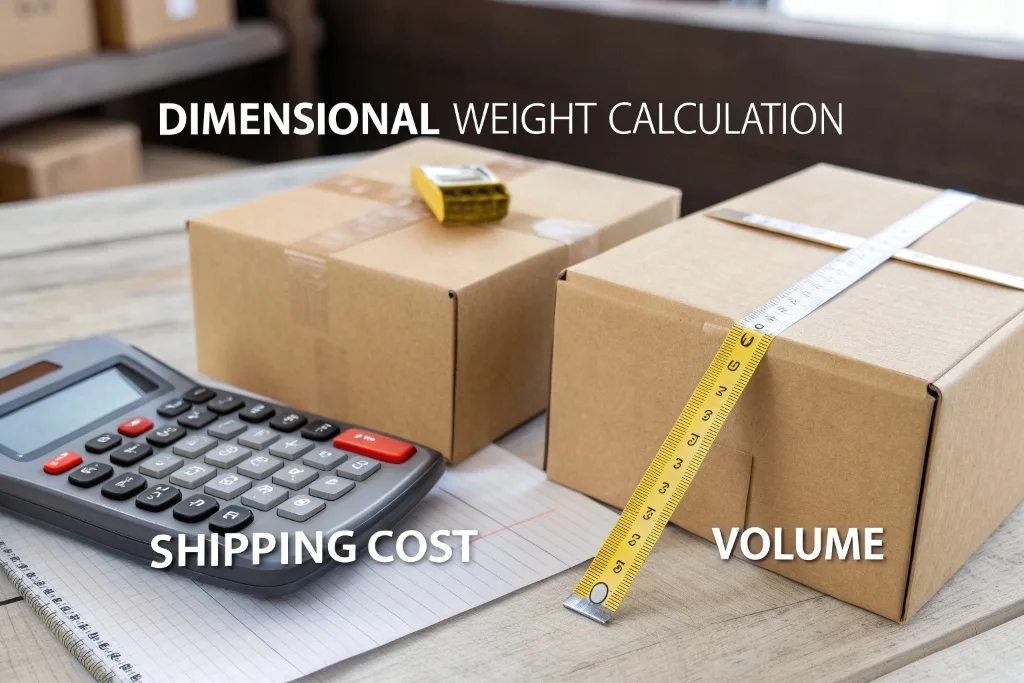
Amazon's fee structure is ruthless when it comes to size. I often see clients design a beautiful, spacious box for a retail shelf, only to realize that the extra inch of "air" inside pushes them into a higher fulfillment tier, costing them thousands of dollars a year in fees.
Understanding Dimensional Weight
Dimensional (DIM) weight is calculated by volume (Length x Width x Height / 139). If your box is large but light, Amazon charges you based on the size, not the scale weight.
- The Problem: You need padding (bubble wrap, inserts) to protect the item, but padding adds volume.
- The Conflict: Increasing the box size for safety increases fees. Decreasing the size lowers fees but increases the risk of damage returns.
The "Right-Sizing" Strategy
Overcoming this requires precise structural design. Instead of using a stock box size (e.g., 6x6x6) that leaves 2 inches of gap, we manufacture custom boxes that fit the product like a glove (e.g., 4.5x4.5x4.5).
- Custom Inserts: We use custom-die-cut cardboard inserts rather than loose void fill (like peanuts). Inserts provide better structural rigidity with less volume.
- Material Selection: Choosing a stronger, thinner material allows for a smaller outer dimension than a thick, bulky one.
Checking the Tiers
Before finalizing a design, we always check Amazon's size tiers (Small Standard, Large Standard, etc.).
- The Cliff Edge: If your package is 0.1 inches over the limit for "Small Standard," you jump to "Large Standard" and pay significantly more.
- Design Adjustment: Sometimes, simply rearranging the product components (e.g., placing a cable underneath a device rather than next to it) can change the dimensions enough to drop a tier.
| Strategy | Benefit | Potential Risk |
|---|---|---|
| Stock Box + Void Fill | Easy to source | High DIM weight fees, product movement |
| Custom Box (Tight Fit) | Lowest fees, secure product | Requires precise engineering to prevent crushing |
| Component Rearrangement | Moves to lower fee tier | May affect unboxing presentation |
Challenge 2: Surviving the Rigorous ISTA 6-Amazon Drop Tests?
Will your product survive a 3-foot fall onto concrete? Can it withstand the weight of heavy boxes stacked on top of it? Amazon's fulfillment centers are aggressive environments.
Designing a paper structure that can pass the ISTA 6-Amazon drop test is difficult. The box must withstand drops on corners and edges without the contents breaking, requiring careful selection of corrugated flute profiles like B-flute or E-flute.
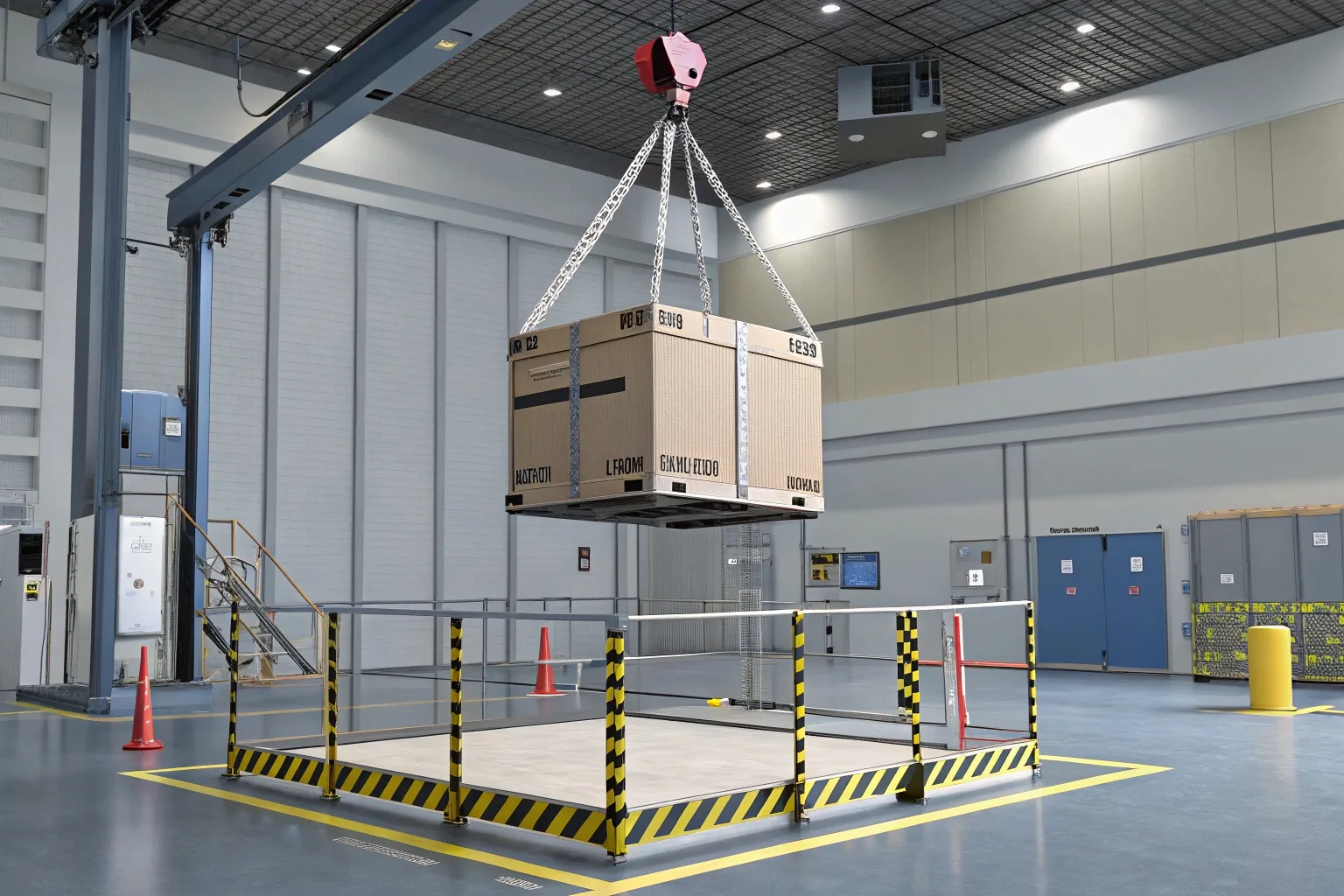
Many sellers assume that if a box looks sturdy, it is. But Amazon's warehouses are automated, fast-paced, and rough. Packaging that survives a trip from the store to a car might be destroyed in an FBA center.
The ISTA 6-Amazon Standard
Amazon requires many products to pass the ISTA 6-Amazon test. This isn't just a single drop. It involves:
- Multiple Drops: Drops on the face, edge, and—most critically—the corner.
- Vibration Testing: Simulating a truck ride.
- Compression: Simulating heavy loads stacked on top.
Flute Selection Matters
The challenge here is choosing the right "flute" (the wavy layer in corrugated cardboard).
- E-Flute: Very thin (1.6mm). Great for printing and retail aesthetics, but has lower crush resistance. Good for small, light items.
- B-Flute: Thicker (3mm). Much stronger crush resistance and shock absorption. Better for heavier items but looks "rougher" on the shelf unless laminated.
- The Trade-off: We often have to decide between the sleek look of E-flute and the survival strength of B-flute. Often, we solve this by using a "litho-laminate" box, where a high-quality printed sheet is glued to a strong B-flute core.
The Moisture Factor
Another hidden enemy is moisture.
- Sea Freight: Shipping from China involves weeks on the ocean. Cardboard acts like a sponge.
- The Result: High humidity weakens the paper fibers. A box that is strong in a dry factory might collapse after 30 days at sea.
- The Solution: We have to account for this strength loss in the design phase, often over-engineering the box strength by 20-30% to ensure it arrives at Amazon with sufficient integrity.
Challenge 3: Achieving "Ships in Own Container" (SIOC) Certification?
Want to skip the Amazon brown box and get lower fees? Is your packaging tough enough to be the shipping container? This is the gold standard but requires advanced engineering.
SIOC certification allows products to ship without an Amazon overbox, reducing waste and fees. The challenge is creating packaging that looks premium but is robust enough to survive the courier network unprotected.
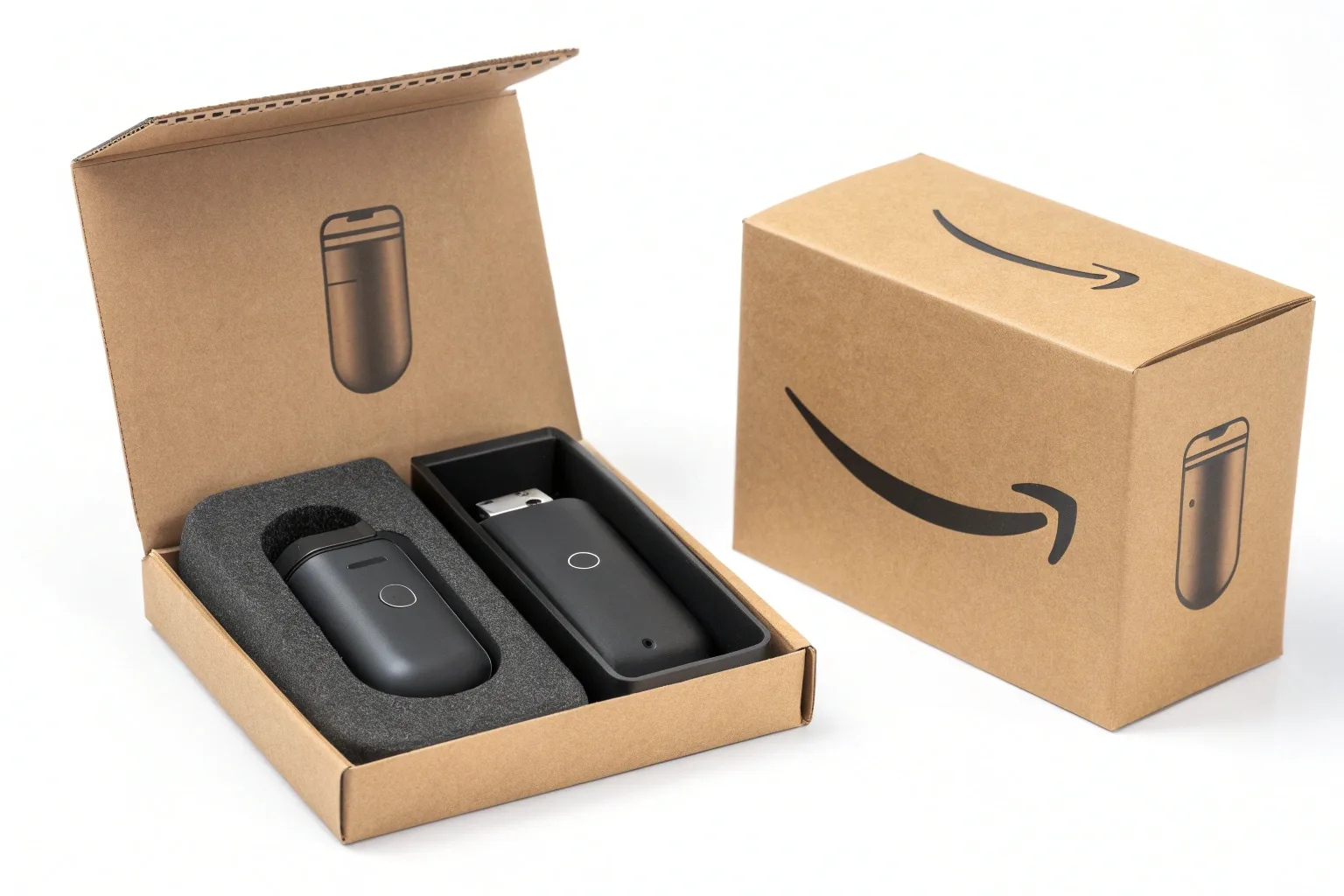
Amazon is pushing hard for "Frustration-Free Packaging" (FFP) and SIOC. It’s great for sustainability and fees, but it puts all the pressure on your box.
The Cosmetic vs. Structural Conflict
Usually, a product has two layers: a pretty retail box (primary packaging) and a sturdy shipping carton (secondary packaging). SIOC forces these two to become one.
- The Risk: Your beautifully printed brand box is now getting slapped with shipping labels, dragged on conveyor belts, and dropped on doorsteps.
- The Design Challenge: How do you keep it looking "premium" when it arrives scuffed and dirty?
Engineering for SIOC
To achieve this, we use specific techniques:
- Reinforced Walls: We often use Double-Wall corrugated board or heavy-duty single wall.
- Recessed Areas: Designing the box so that the critical branding is recessed or protected by a rim, so scuffs hit the edges, not the logo.
- Tamper-Evident Seals: Since there is no outer box, the package must be completely secure so it cannot pop open during transit. Standard tuck flaps aren't enough; we need aggressive adhesives or locking tabs.
Sustainability Benefits
The upside is massive.
- Fee Discounts: Amazon often offers credits for SIOC items.
- Eco-Friendly: You eliminate the waste of the outer box and void fill.
- Customer Perception: Customers appreciate less trash.
However, passing the testing for this is much harder than standard FBA packaging. It requires iterative prototyping and testing in our lab before we even send it to Amazon for certification.
Challenge 4: Integrating Compliance Elements Without Ruining Aesthetics?
Does your box look cluttered with barcodes and warnings? Struggling to fit legal text while keeping your brand minimalist? Compliance is non-negotiable, but it can kill a good design.
The challenge is incorporating mandatory elements like FNSKU barcodes, Country of Origin labels, and suffocation warnings into the design without disrupting the branding aesthetics or violating Amazon's strict legibility rules.
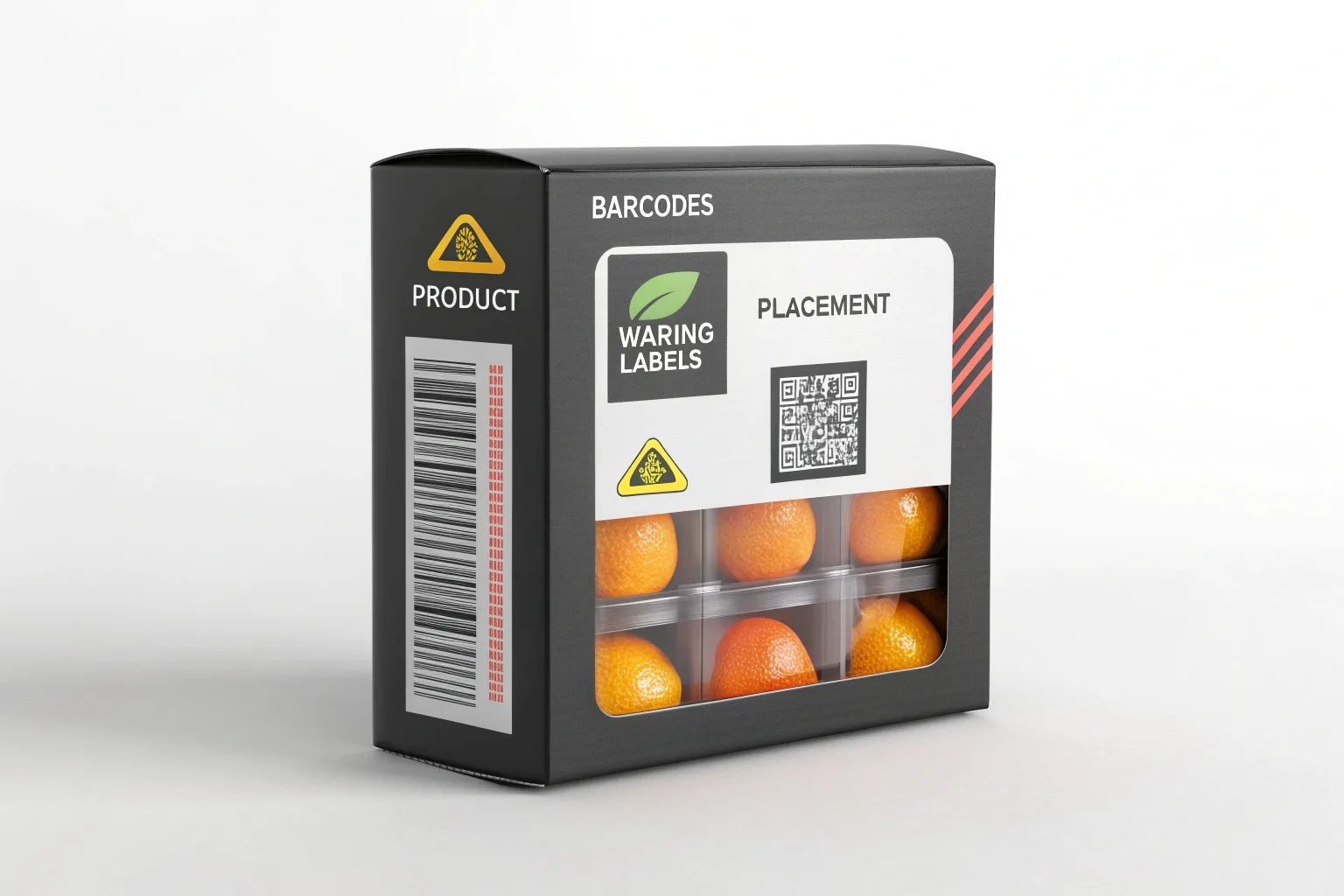
Amazon will reject inventory if labels are wrong. But designers hate putting giant barcodes and "Made in China" text on the front of a luxury box.
The Mandatory Elements
You must include:
- FNSKU: The unique Amazon barcode. It must be scannable and on a flat surface (not a corner).
- Country of Origin: "Made in China" (or your origin) is a legal customs requirement for importing into the US.
- Suffocation Warning: Required for any poly bags or boxes with large openings.
Strategic Placement
We tackle this by treating compliance as part of the design layout, not an afterthought.
- The "Bottom of the Box" Strategy: We usually group all technical data (barcodes, certifications, addresses) on the bottom panel. This keeps the front and sides clean for branding.
- Stickers vs. Printing:
- Printing: It looks professional to print the FNSKU directly on the box.
- Stickers: If you sell on multiple channels (Shopify + Amazon), you might not want the Amazon barcode printed permanently. In this case, we design a specific "blank space" on the artwork where a sticker can be applied perfectly every time.
- Contrast Rules: Amazon requires high contrast for barcodes (black on white). You cannot print a faded gray barcode on a dark blue background. We often have to alter the color palette slightly in just that one area to ensure scannability.
| Element | Placement Restriction | Design Tip |
|---|---|---|
| FNSKU Barcode | Must be flat, scannable | Place on bottom or back; ensure white background block |
| Country of Origin | Visible to customs | Integrate into the small print block near the address |
| Suffocation Warning | Visible on bag/opening | Print directly on poly bag to avoid extra stickers |
Challenge 5: Managing Category-Specific Prep Requirements?
Selling liquids, sharps, or breakables? Does your standard box meet the specific safety rules for your category? One size definitely does not fit all in FBA.
Amazon has complex prep rules for specific categories, such as requiring double-seals for liquids or ensuring sharp edges are unexposed. Designing a standard box that incorporates these safety measures without adding excessive cost is a major hurdle.
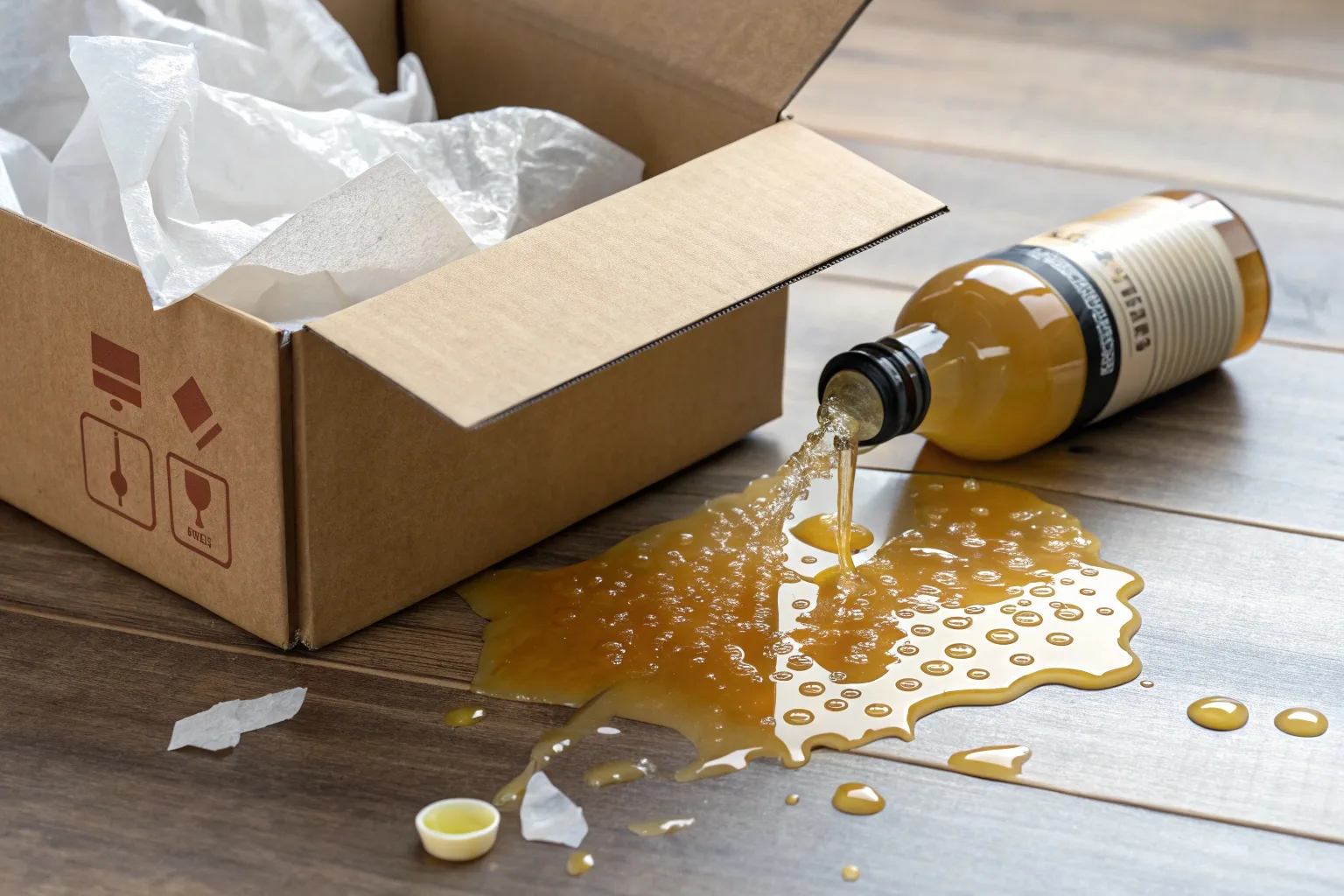
I've seen sellers lose thousands of dollars in inventory because their shampoo bottles leaked or their knife set poked through the box. Amazon will classify these as "unsellable" immediately.
The Double-Seal Dilemma for Liquids
If you sell liquids, a simple screw cap isn't enough. Amazon often requires a "double seal."
- The Rule: A factory seal (foil) underneath the cap, AND the cap must be taped or shrink-wrapped so it can't loosen.
- Packaging Solution: Instead of relying on Amazon to do this (which costs fees), we can design the primary box to act as that security measure. We might use a box structure that physically locks the pump or cap in place so it cannot rotate during transit.
Sharp Object Protection
For items like knives or tools:
- The Rule: No sharp points can pierce the packaging, even during a drop test.
- Packaging Solution: A standard thin paper box will fail. We have to design rigid inserts or use protective sheaths inside the box. Often, we use a "double-wall" design at the tip area of the product to ensure that even if the knife slides, it hits a buffer zone, not the outside world.
Fragile/Glass Items
- The Rule: Must pass the drop test without breaking.
- Packaging Solution: This usually requires moving away from simple folding cartons to boxes with integrated EPE foam inserts or corrugated dividers. The challenge is doing this without adding too much volume (see Challenge 1).
Challenge 6: Creating a Premium Unboxing Experience in a Harsh Environment?
Does your box look beat up when it arrives? How do you maintain that "Apple-like" feel after a global shipping journey? The logistics chain is the enemy of luxury.
The challenge is designing a premium unboxing experience that remains intact and presentable after the package has been subjected to ocean freight, customs inspections, and courier handling.
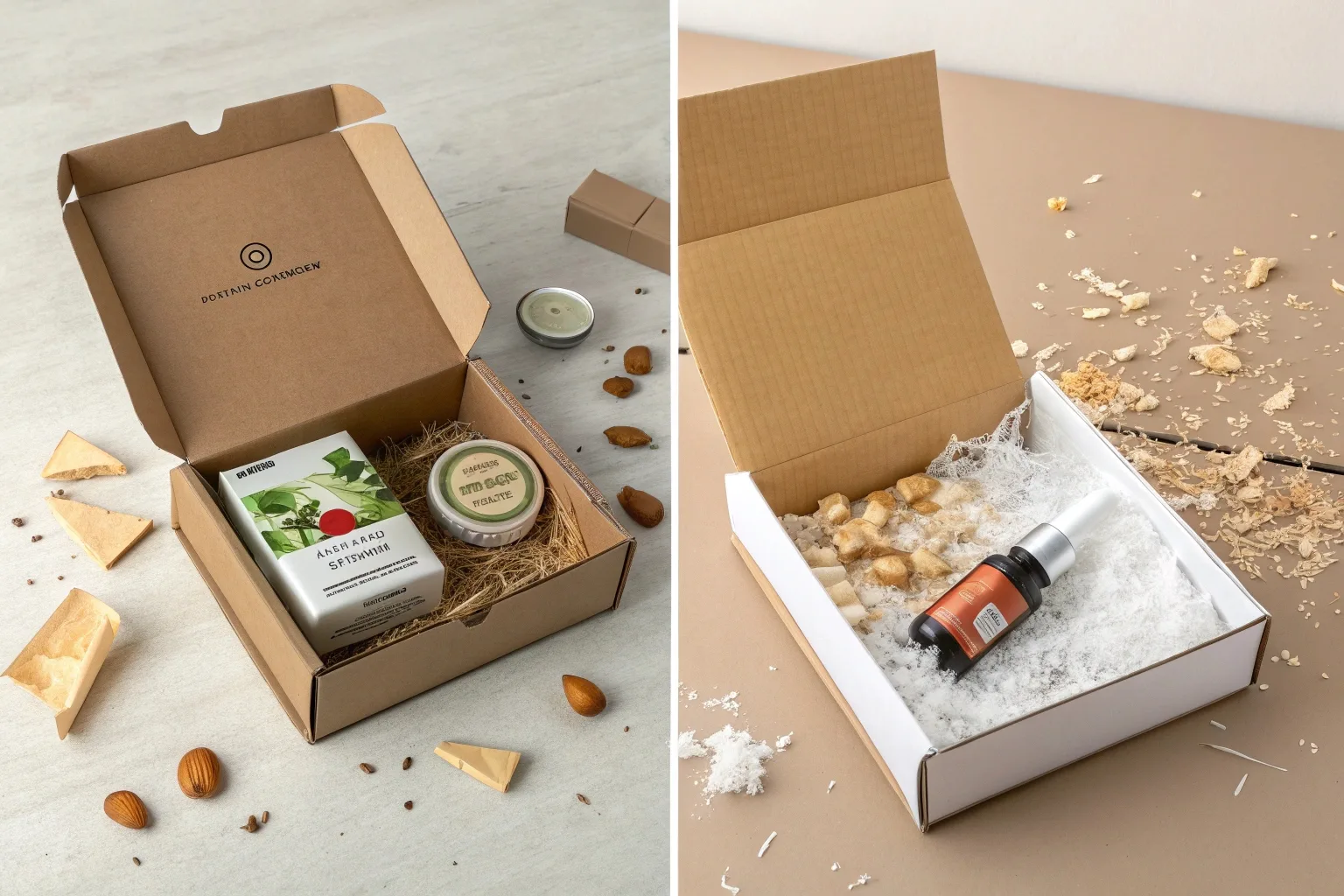
We all want that Instagram-worthy unboxing moment. But finishes that look good in a design file often fail in the real world.
The Vulnerability of Finishes
- Soft-Touch Lamination: This feels luxurious (velvety) but scratches incredibly easily. If boxes rub against each other in a shipping carton, they will arrive looking scuffed.
- Black Boxes: Printed black boxes show paper dust and scratches more than any other color.
- The Fix: We recommend "Anti-Scratch" laminations for dark boxes. It costs slightly more but saves the brand image. We also ensure master cartons are packed tightly so individual unit boxes cannot shift and rub.
Structural Fatigue
Cardboard "tires" out. After weeks of being stacked on a pallet, the bottom boxes might bulge.
- Interior Integrity: Even if the outside gets scuffed, the inside can remain pristine. We focus on the "reveal."
- Strategy: We might use a rugged, simple corrugated exterior, but a high-end, full-color printed interior. When the customer opens the rough shipping box, they are greeted with vibrant branding inside. This separates the "shipping shield" from the "brand experience."
The "Swoosh" Factor
Premium rigid boxes (like iPhone boxes) have a slow, friction-fit opening (the "swoosh").
- The Challenge: Humidity changes (China to USA) can change the paper tolerance, making the lid too tight (can't open) or too loose (falls off).
- Engineering: We have to account for these environmental changes when calculating the gap tolerances between the lid and the base.
Challenge 7: Reducing "Item Not as Described" Returns via Interior Design?
Are customers returning products because they "don't work" or parts are "missing"? Is your packaging causing confusion? Packaging isn't just a container; it's an instruction manual.
A major challenge is reducing the risk of returns by designing the interior layout to display quick-start guides or essential parts immediately, preventing customers from thinking items are missing or broken.
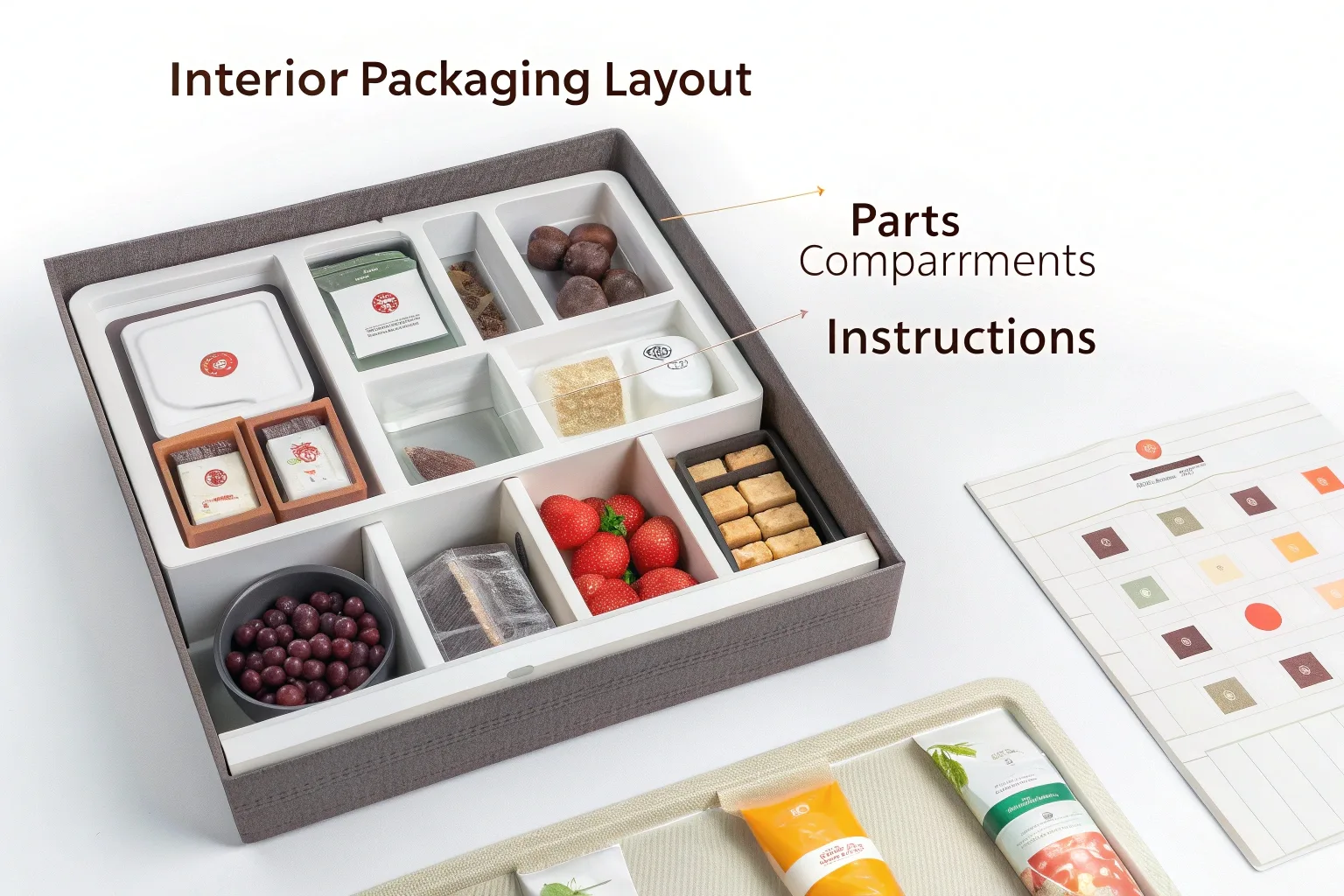
I recently worked with a client selling a complex kitchen gadget. They had a high return rate claiming "missing parts." The parts weren't missing; they were just hidden under a cardboard flap.
The "First 5 Seconds" Rule
When a customer opens the box, they make a judgment in 5 seconds.
- Visibility: If a charging cable or screw set is hidden under a false bottom, the customer might throw the box away without finding it.
- The Fix: We design custom molded trays or cutout inserts where every single component is visible on a single layer if possible. If layers are needed, we add "LIFT HERE" text on the divider.
Integrated Instructions
Nobody reads manuals.
- Flap Printing: We often print "Quick Start" steps (1, 2, 3) directly on the inside flap of the box. The customer has to see it to open the product.
- QR Codes: Placing a large support QR code right on the structural insert encourages customers to watch a setup video before they get frustrated and return the item.
Organization = Quality
A chaotic box suggests a chaotic product.
- Secure Placement: Items shouldn't rattle. We design inserts that snap-fit the product.
- Result: When a customer opens a box where everything is perfectly in place, their confidence in the product quality goes up, and return rates go down.
Conclusion
Designing for Amazon FBA is a multi-dimensional puzzle. You must balance the physical protection of the product with the strict financial constraints of fees and the aesthetic demands of branding. It requires engineering, not just graphic design.